Thursday, 14 March 2013

Kochi-Muziris Biennale 2012

The Kochi-Muziris Biennale 

The Kochi-Muziris Biennale is far more than an art exhibition. It is one of independent India's most visionary cultural movements, proving that art has the power not merely to decorate walls, but to transform cities, revive forgotten heritage and reshape the identity of an entire region. Conceived by celebrated artists Bose Krishnamachari and Riyas Komu, and realised through the establishment of the Kochi Biennale Foundation (KBF) in 2010, the Biennale was born from a bold dream: to create India's first international contemporary art biennale in a city whose history has always celebrated the meeting of cultures. With the support of the Government of Kerala and countless patrons, that dream became a remarkable reality.

Fort Kochi, with its centuries-old streets, warehouses, spice godowns and colonial buildings, became the perfect canvas. Rather than constructing sterile galleries, the founders ingeniously restored neglected heritage structures and transformed them into vibrant spaces where history and contemporary creativity coexist. The Biennale celebrates not only Indian artistic expression but also Kochi's own extraordinary legacy as an ancient maritime crossroads linked to the legendary port of Muziris, where merchants, travellers and ideas from across the world converged for centuries.

Today, the Kochi Biennale Foundation has elevated contemporary Indian art onto the global stage while making art accessible to ordinary people. It has inspired thousands of young artists, encouraged dialogue across cultures and firmly established Kochi as one of Asia's foremost destinations for art, culture and heritage tourism. Hotels, cafés, homestays, local artisans, transport providers and countless small businesses benefit enormously from the influx of visitors, demonstrating that investment in culture also creates meaningful economic prosperity.

The inaugural Biennale, held in 2012-13, was itself a landmark event. Curated by Bose Krishnamachari and Riyas Komu, it brought together 89 artists from 23 countries, exhibiting across 13 restored heritage venues in Fort Kochi and Mattancherry. Visitors encountered an extraordinary range of paintings, sculptures, photography, installations, performance art, films and multimedia works that challenged convention and encouraged reflection. The historic Aspinwall House, David Hall, Durbar Hall, Pepper House and several other iconic venues became living museums where every corridor, courtyard and weathered wall told a story.

The Kochi-Muziris Biennale is ultimately a celebration of imagination. It reminds us that when a city embraces art, it does far more than host an exhibition. It preserves its past, enriches its present and inspires future generations to see the world with greater curiosity, creativity and compassion.


Souvenir Art


Kochi-Muziris Biennale 2012

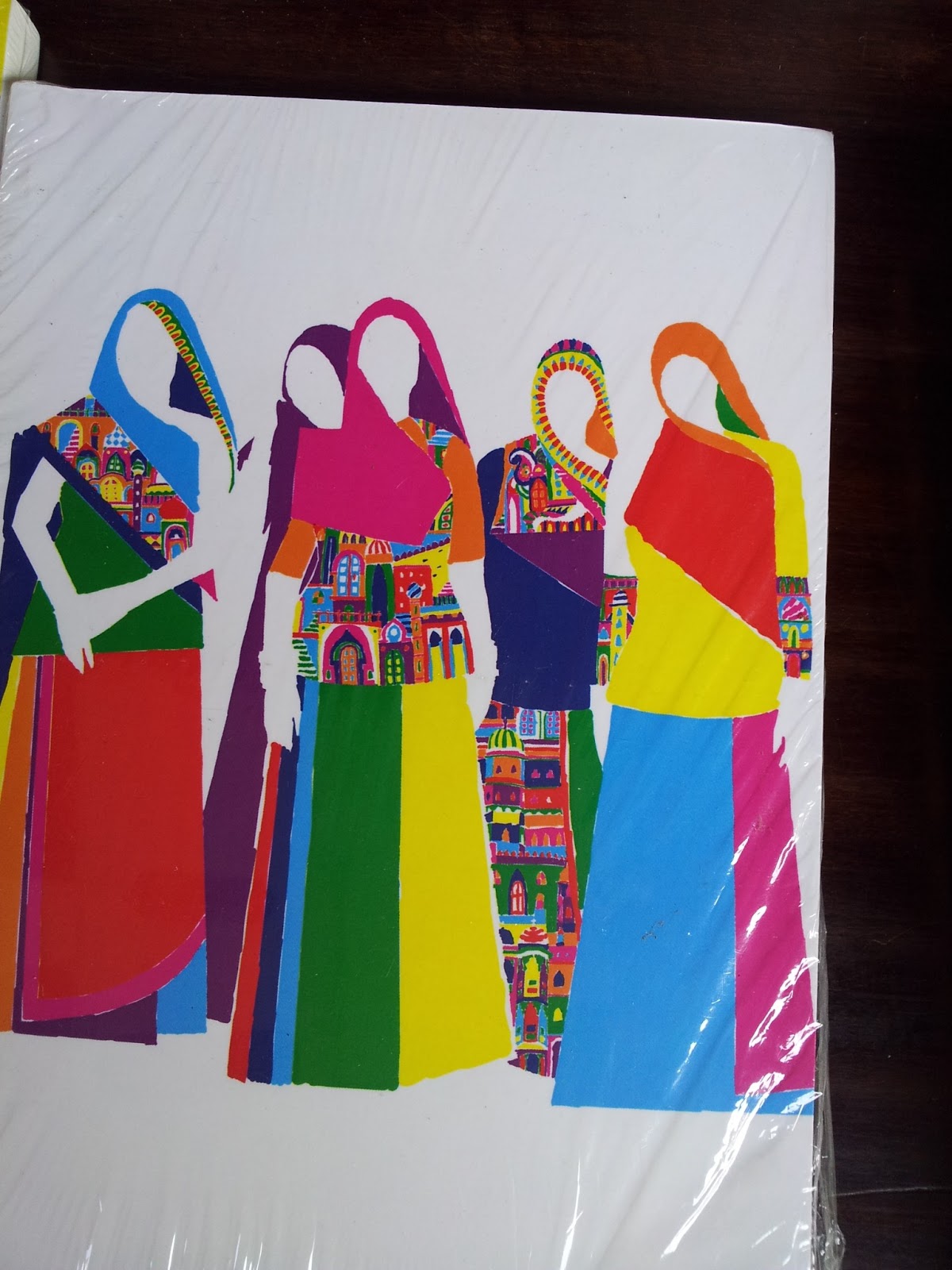
PRABHAKARAN K'S ART

The Kochi-Muziris Biennale is much more than India's largest exhibition of contemporary art. It is a celebration of imagination, dialogue and cultural renewal. Conceived by visionary artists Bose Krishnamachari and Riyas Komu, the Biennale transformed the centuries-old streets, spice warehouses and colonial buildings of Fort Kochi into living galleries where history and contemporary creativity converse effortlessly. Rather than confining art to elite museums, the Biennale brought it into public spaces, making it accessible to everyone, from seasoned collectors and critics to schoolchildren and curious tourists. It has not only elevated Indian contemporary art to international prominence but has also reintroduced Kochi to the world as a vibrant destination where heritage, history, tourism and artistic expression blend harmoniously. In many ways, the Biennale has proved that art can regenerate a city just as surely as commerce once did in the ancient port of Muziris.

Among the distinguished Indian artists who attracted considerable attention during the inaugural 2012-13 Kochi-Muziris Biennale was the veteran Kerala artist Prabhakaran K. Born in Calicut (Kozhikode) in 1949, Prabhakaran had, over several decades, established himself as one of Kerala's most sensitive and intellectually engaging painters. His artistic vocabulary was deeply rooted in the landscapes, myths, rituals and cultural memories of Kerala, yet his work spoke a universal language of human emotion and philosophical inquiry.

Prabhakaran's paintings resist instant interpretation. They invite contemplation rather than explanation. Layer upon layer of colour, texture and symbolic imagery reveal themselves slowly, rewarding the patient observer. His canvases often inhabit that fascinating space between memory and imagination, where the visible world gently dissolves into the subconscious. Nature, folklore, spirituality and the passage of time emerge repeatedly as quiet yet powerful themes. There is no theatricality in his work; instead, there is an understated intensity that encourages viewers to pause, reflect and discover their own meanings.

His presence at the inaugural Biennale was particularly significant because it represented the coming together of generations. While many younger artists experimented boldly with installations, video art and multimedia, Prabhakaran demonstrated that traditional painting remained an equally compelling medium for contemporary expression. His works served as a reminder that innovation is not always about adopting new technologies; sometimes it lies in discovering new ways of seeing timeless truths.

Standing before a Prabhakaran canvas is rather like reading a profound poem. It refuses to surrender all its meanings at first glance. Instead, it asks for silence, patience and participation. Every viewer leaves carrying a slightly different interpretation, which is perhaps the highest compliment any work of art can receive.

The Kochi-Muziris Biennale has always aspired to provoke conversation rather than provide answers, and Prabhakaran K.'s contribution embodied that philosophy beautifully. His paintings reminded visitors that art is not merely something to be looked at. It is something to be experienced, questioned and quietly absorbed. Like the Biennale itself, his work invited us to slow down in an increasingly hurried world and rediscover the forgotten art of contemplation.


Personal Details
Born in 1951, Kozhikode. At present staying and working at Kozhikode.
Educational Qualification
B.A - Malabar Christian College, Kozhikode
Studied Painting in College of Fine Arts, Trivandrum 1977 - 78.
B.A Fine ( Painting ) , Faculty of Fine Arts, M.S. University, Baroda 1985
Taught in Dept. of Painting, Faculty of Fine Arts, M.S.University for a short period.
Stayed and worked in Santinikethan ( W.B ) from 1995 to 97. Chennai 97 - 99.

Exhibitions 

Solo Exhibition - College of Fine Arts, Trivandrum 1994
Participated in several group shows.
Camps: National Painters Camp - Kerala Lalitha Kala Academi - 1990

Achievements 

Senior Fellowship from HRD ( 1995 - 97 )


Kochi-Muziris Biennale 2012


PHOTO EXHIBITION - CROSS FIRE

Among the many unforgettable experiences at the inaugural 2012 Kochi-Muziris Biennale, one exhibition lingered in my mind long after I had left its galleries. It was "Crossfire", the haunting photographic installation by the renowned Bangladeshi photographer, educator and human rights activist Shahidul Alam.

Born in Dhaka in 1955, Alam's journey into photography was anything but conventional. Having earned a PhD in Chemistry in London, he could easily have pursued the certainty of an academic career. Instead, he returned to Bangladesh in 1984, armed not with laboratory instruments but with a camera, convinced that photography could become a language of justice. He went on to establish the pioneering Drik Picture Library, the internationally acclaimed Pathshala South Asian Media Institute, and the Chobi Mela photography festival, creating platforms that empowered photographers from what he famously called the "Majority World" rather than the "Third World."

Alam has never viewed photography as the art of merely making beautiful pictures. For him, the camera is a witness, a conscience and, when necessary, an instrument of resistance. Throughout his career he has repeatedly stood beside the powerless, often at considerable personal risk. His commitment to documenting injustice has invited censorship, intimidation and even imprisonment, yet he has remained steadfast in his belief that silence is the greatest ally of oppression.

It is this spirit that found powerful expression in Crossfire. Rather than graphically documenting violence, Alam adopted an allegorical and deeply emotional approach to the alleged extrajudicial killings attributed to Bangladesh's Rapid Action Battalion (RAB). Empty streets, abandoned spaces, grieving families and quiet metaphors replaced sensationalism. The photographs were based on meticulous research, yet they sought not merely to inform but to make the viewer feel the chilling absence left behind when justice is denied. When the exhibition first opened in Dhaka in 2010, authorities shut it down before public viewing, arguing that it would create disorder. Public protests and legal action eventually enabled it to reopen briefly, transforming the exhibition itself into a symbol of artistic freedom.

At the Kochi-Muziris Biennale, Crossfire resonated deeply with audiences. Visitors moved through the installation in near silence, many emerging visibly shaken. Its power lay in reminding us that the abuse of unchecked state power is not confined to one nation. Whether in South Asia or elsewhere, democracies remain healthy only when citizens, artists, journalists and institutions continue to ask difficult questions. Art, in this sense, becomes not an ornament of civilisation but one of its essential safeguards.

That is perhaps the enduring genius of Shahidul Alam. He demonstrates that a photograph can do more than preserve a moment. It can challenge official narratives, restore dignity to forgotten lives and compel society to look where it would rather turn away. Governments of every persuasion, however popular or powerful, require scrutiny. When independent voices fall silent, accountability weakens; when artists dare to speak, democracy breathes a little easier.

Walking away from Crossfire, I realised that some exhibitions are admired for their beauty, while others are remembered because they quietly alter the way we see the world. Shahidul Alam's remarkable work belongs firmly in the latter category.


 “Crossfire” is an exhibition of photographs where Bangladesh’s leading photographer Shahidul Alam, takes an allegorical look at the phenomenon.


Sunday, 24 February 2013

Trip To The Universal Studios Hollywood!


A Memorable Trip to Universal Studios Hollywood! 

Our visit to Universal Studios Hollywood, "The Entertainment Capital of LA," in Los Angeles County, California, USA, remains one of the most exciting highlights of our family holiday in November 2011. As one of the oldest and most iconic working movie studios in the world, Universal Studios is far more than just a theme park. It is the birthplace of countless cinematic dreams and a fascinating window into the extraordinary imagination, creativity and technical brilliance that have shaped Hollywood for over a century. 

For the four of us, it was an unforgettable journey into the magical world of filmmaking. The famous Studio Tour gave us an enthralling glimpse behind the scenes, revealing how breathtaking illusions, spectacular special effects and elaborate movie sets combine to create the make-believe worlds that millions of people across the globe happily accept as reality. It was a wonderful reminder that every great film is born from the perfect marriage of art, technology and boundless imagination.

Walking through the park was an adventure in itself. Familiar movie characters strolled among the visitors, delighting children and adults alike, blurring the line between fantasy and reality. Every corner seemed to hold another surprise, another story waiting to unfold. Equally memorable was our leisurely walk through the vibrant Universal CityWalk, with its lively blend of entertainment, restaurants and shops adding yet another dimension to an already exhilarating day.

Who has not been captivated by the magic of a Hollywood movie? This enchanting visit allowed us, if only for a day, to step inside that magical universe and experience firsthand the craftsmanship of these remarkable dream merchants. It was impossible not to marvel at how convincingly imagination could be transformed into reality.


All excited!! The Road To Universal Studios.


 Entrance to Jurassic Park, the only water ride at Universal Studios Hollywood.

Karan was too young to take the ride hence had to sit out.

Panoramic view of the lower lot from the View Point.

The Simpsons Ride is a family simulator ride located next to the entrance to the Studio Tour ride. The ride contains 24 vehicles, where each vehicles seats 8 guests. The ride lasts for 4 minutes.

Buildings in the Backlot

The explosive special effects from the Fast and The Furious : Extreme Close-Up.

Jaws set, where one gets attacked by a shark lurking beneath the waters.

Homes along the Wisteria Lane.

The Studio Tour ride is a 45 minute ride on tram vehicle, considered to be the signature ride of Universal Studios Hollywood.

An American Cultural Icon - The famous 45 feet tall and 350 feet long 'Hollywood' sign on Mount Lee in the Hollywood Hills area of the Santa Monica Mountains.


Nandini & Karan in the jaws of the shark from the movie JAWS!

Rehan with some scary masks

What an unforgettable day. The lit Fountain at the park entrance.

Universal CityWalk the entertainment, dining and shopping promenade by night.

Who has not been captivated by the magic of a Hollywood movie? This bewitching trip took us on a tour of the world of make believe, which has been made so believable, by these magnificent dream merchants. The various fascinating characters from the movies walking around and mingling with the crowds added to the enchantment. All in all an unforgettable day we all enjoyed very much.  
We are sharing a few treasured photographs from that memorable visit. They capture not only the attractions we enjoyed but also a precious chapter in our lives as a young family, discovering the world together with wide-eyed excitement. We returned with wonderful memories, countless stories and an even deeper admiration for "The Grand Magical World of Hollywood." As we left Universal City that evening, we were already looking forward to returning someday, when the children were a little older, to rediscover the magic through their growing eyes.